Why Endometriosis Awareness Still Matters
I was 11 years old when my periods started. And almost immediately, so did the pain.
Not the "ugh, cramps" kind of pain that gets joked about. The kind that made me faint. The kind that had me curled up on the bathroom floor missing school, missing sport, missing out. The kind I couldn't even find the words for, and that nobody around me seemed to have words for either.
It would take nearly nine years before someone finally gave it a name: endometriosis.
Nine years. And that's not unusual. That's actually pretty close to the average.
In Australia, around 1 in 7 females will be diagnosed with endometriosis by mid-life. Over a million people. And yet, on average, it still takes 6 to 8 years from when symptoms begin to when someone gets a diagnosis. Those aren't just numbers on a page. That's years of being told you're fine when you're not. Years of missed school and missed work. Years of wondering if you're just being dramatic, because everyone around you seems to think so.
Awareness changes that timeline.
When young people are taught what isn't normal: that fainting from period pain is a red flag, not a rite of passage, they seek help sooner. When GPs recognise the patterns earlier, referrals happen faster. When families understand what they're looking at, they become better advocates. Education doesn't cure endometriosis. But it can absolutely change how long someone spends suffering without answers.
Here's something I don't think gets said enough: one of the most damaging parts of living with endometriosis isn't just the physical pain. It's the years of not being believed.
The scans that come back "clear." The doctors who tell you you're too young. The quiet suggestion that maybe you're just not coping well. After a while, you stop questioning the system and start questioning yourself.
That kind of chronic dismissal takes a real toll.
Research consistently shows higher rates of anxiety and depression among people living with endometriosis, not only because of the pain itself, but because of how long people are left to carry it alone and unvalidated. When we create a culture where this condition is understood, where a GP doesn't brush off severe period pain, where a parent knows when to push for a referral, we're doing more than improving clinical outcomes. We're protecting people's sense of self. That matters enormously.
This one's harder to talk about, but it needs to be said: Nearly two-thirds of endometriosis-related hospitalisations in Australia happen in private hospitals.
Around 1 in 10 people end up self-funding surgery because the public waitlists are just too long to bear. What that tells us is that access to timely care isn't equal. It never has been. And that's not okay. Greater public awareness creates pressure for change, in funding, in policy, in how seriously this condition is taken at a systemic level. Progress is being made, but there's still a long way to go. Education keeps the momentum alive.
Even now, in 2025, people are still being told things like:
"Painful periods are just part of being a woman."
"It's mostly a fertility issue."
"Your scan was clear, so there's nothing there."
"Pregnancy will fix it."
None of these are medically accurate. Not one.
And yet they're still being repeated in doctor's offices, around kitchen tables, on social media.
Endometriosis is a complex, whole-body inflammatory disease. It can affect the bowel, the bladder, and the nerves just to name a few. Standard imaging often can't detect it. And there is no cure. When accurate information isn't out there, myths rush in to fill the gap. And myths cost people years of their lives.
Here's something that actually gives me hope: hospitalisation rates for women aged 20–24 have doubled over the past decade. Not necessarily because endometriosis is becoming more common, but because younger people are increasingly refusing to accept debilitating pain as normal. That's a shift in culture. And it matters. When someone understands what they're dealing with earlier, they have more options. Earlier symptom management. Access to multidisciplinary care. Less reliance on heavy pain medication just to get through the day. Fewer emergency department visits. More of their life intact. The earlier the recognition, the more someone can do about it.
Maybe the most important thing awareness does is this: it reminds people they're not isolated in their experience.
Endometriosis doesn't just live in the body. It lives in the silence around it. In the cultural discomfort with talking about menstruation, pelvic pain, fertility. When those conversations are avoided, in classrooms, in workplaces, in homes, the loneliness that comes with this condition gets even heavier. When we speak about it openly, we create spaces where someone can hear a description and think, "Oh. That sounds like me." Where a partner or friend or colleague can respond with understanding instead of confusion. Where people feel less alone in something that is genuinely, profoundly hard. That's not a small thing. Community changes trajectories.
I think about the 11-year-old version of me a lot.
I wish someone had stood in her classroom and explained what severe period pain could mean…
I wish her GP had been trained to recognise the pattern sooner…
I wish menstrual health hadn't been treated like something to whisper about…
Would it still have taken nine years?
I often cry wishing I could hold her and tell her it will get better and it shouldn't have been that way.
Awareness isn't just a buzzword or a hashtag. It's prevention of delay. It's protection of mental health. It's advocating for equitable access to care. It's dismantling the myths that cost people years of their lives. Every year we shave off the diagnostic delay is a year of someone's life returned to them.
If someone had believed me nine years ago, my journey could have been so different. Awareness gives people that belief. It gives them back their lives. That’s why this work matters, and why your voice matters too.
Anna x
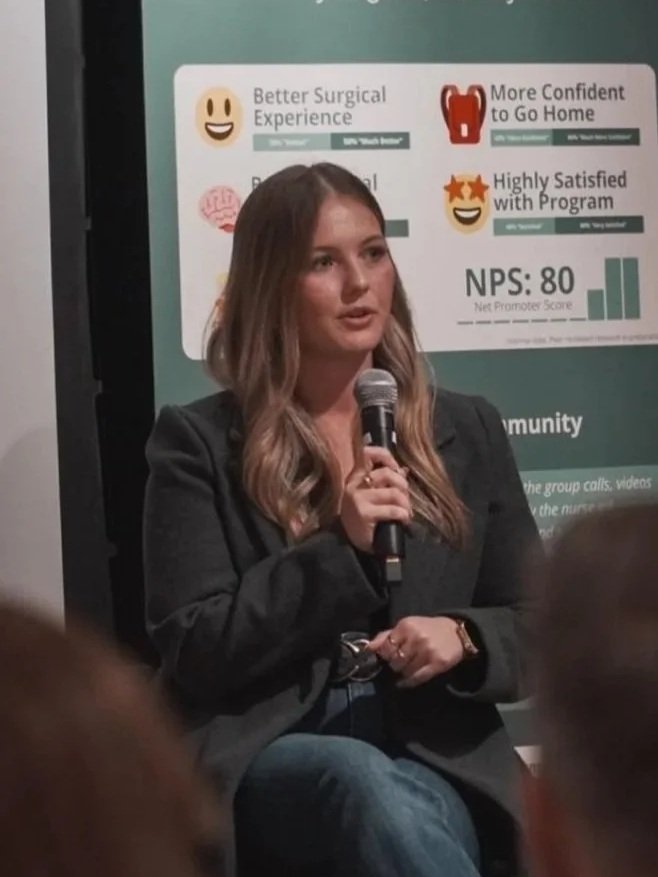
Anna sharing her story at the World Congress of Endometriosis in Sydney, 2025
References:
Australian Institute of Health and Welfare (AIHW) (2025) Endometriosis: Impact of endometriosis, AIHW, Australian Government. Available at: https://www.aihw.gov.au/reports/chronic-disease/endometriosis/contents/impact-endometriosis (Accessed: 30 March 2026).
Endometriosis Australia (2024) Endometriosis Australia achieves peak body status, Endometriosis Australia. Available at: https://endometriosisaustralia.org/endometriosis-australia-achieves-peak-body-status/ (Accessed: 30 March 2026).