

Embedding a Digital Pre- and Post-Surgery Program Into Your Practice (Without Adding Admin Burden)
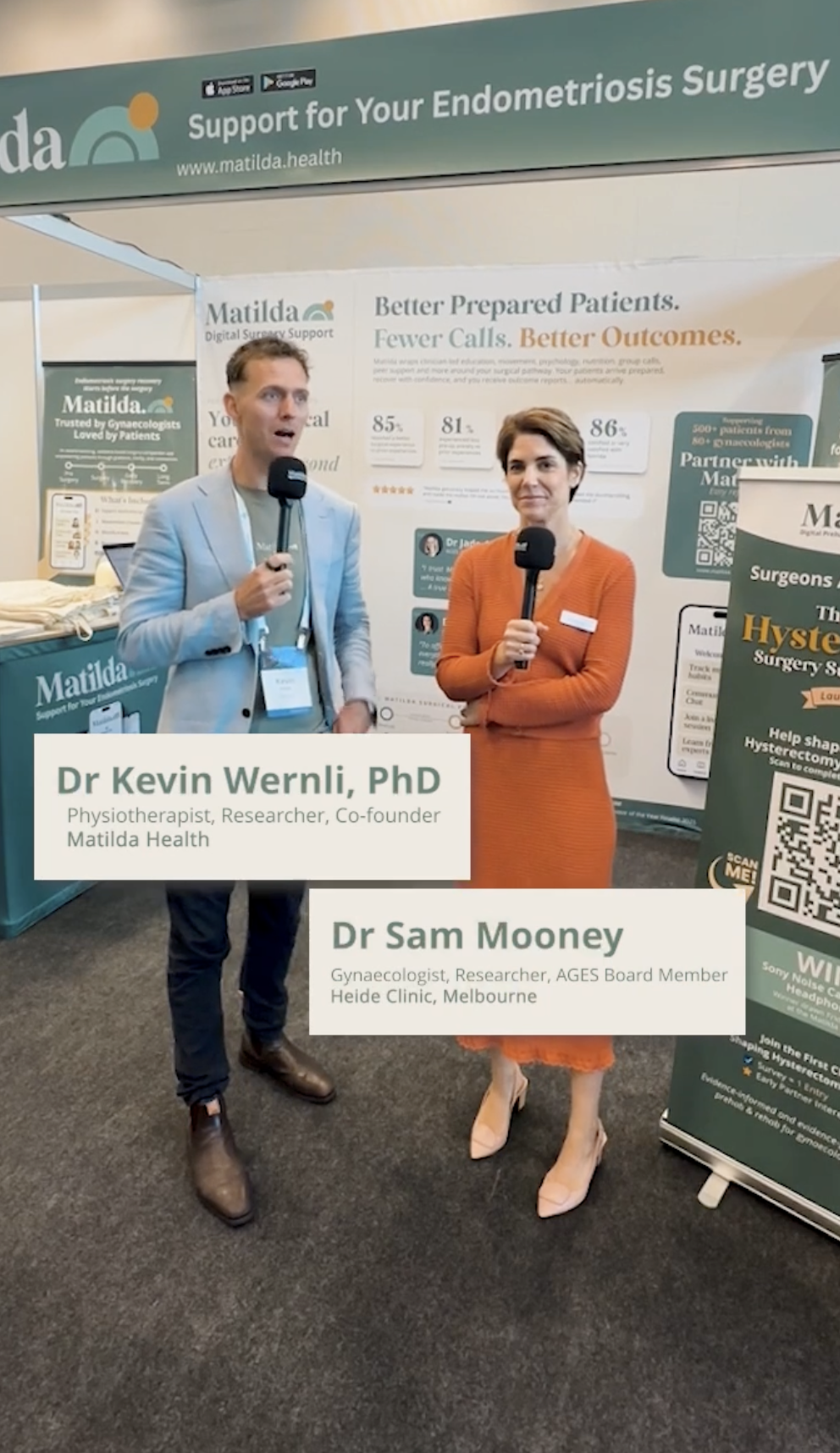
Interview with Dr Sam Mooney (Gynaecological Surgeon)
Multidisciplinary prehab and rehab for surgery isn’t a gynaecological surgeon motivation problem… it’s a structural problem… until now.
Patients frequently:
Arrive to surgery anxious and underprepared
Leave hospital unsure what is normal
Return to follow-up with variable recovery and unanswered questions
This creates pressure on:
Consultation time
Post-operative support
Overall patient experience
And importantly, it sits outside what most clinics can realistically provide within existing workflows.
Why the peri-operative phase matters more than we think
There is growing recognition that outcomes are influenced by more than the procedure itself.
Pre-operative factors such as:
Anxiety
Expectations
Health literacy
…and post-operative factors such as:
Guidance on recovery
Pain understanding
Return to function
can significantly shape:
Patient satisfaction
Recovery trajectory
Follow-up consult efficiency
In practice, this means better-supported patients often:
Ask more focused questions
Recover with greater confidence
Require less reactive support
The challenge: time, scale, and consistency
Most gynaecologists already value multidisciplinary care.
The challenge is not whether to provide it, but how to deliver it:
Referrals can be inconsistent
Access varies by location
Patients don’t always follow through
Coordinating care adds admin burden
As a result, even highly engaged clinicians are often limited by:
Time constraints
Clinic workflow
System fragmentation
A simple model: embedding Matilda as standard care
Rather than adding more referrals or appointments, an alternative approach is to embed support directly into the surgical pathway.
This means:
Every patient receives structured pre- and post-operative support
No reliance on individual follow-through
No additional coordination required from the clinic
From a workflow perspective, this shifts care from:
Optional, variable, and often not accessed → to standardised and consistent
What this looks like in practice
Clinics currently embedding Matilda typically follow a simple flow:
1. Introduce at the point of booking
Patient is informed about the program as part of their surgical pathway
Positioned as standard care, not an optional add-on
2. Quick referral process (20–30 seconds)
Admin submits a simple intake form
No complex setup or back-and-forth required
3. Patient onboarded automatically
Receives access to:
Pre-operative education
Recovery guidance
Multidisciplinary input
Weekly group support
4. Clinician receives outcome insights
Structured feedback returned at key timepoints
Includes patient-reported outcomes and key questions
Designed to reduce, not add, workload
A common concern is whether adding another layer of care increases complexity.
In practice, the goal is the opposite.
Embedding a structured program can help:
Reduce repetitive patient education in consults
Improve baseline patient understanding
Streamline post-operative conversations
Many clinicians find that patients:
Arrive more informed
Feel more prepared
Engage more effectively in follow-up
And they often find that they enjoy less admin calls
Aligning with modern models of care
There is increasing movement towards:
Value-based care
Prehabilitation and rehabilitation
Patient-reported outcomes
Embedding structured peri-operative support aligns with these trends by:
Supporting better preparation and recovery
Providing measurable outcomes
Delivering care beyond the hospital setting
Supporting the whole patient, not just the procedure
Endometriosis is not just a surgical condition.
Patients often require support across:
Pain understanding
Movement and function
Mental wellbeing
Lifestyle factors
Providing this through a scalable model allows clinics to:
Offer more complete care
Without increasing individual clinician workload
Key takeaways for clinicians
The peri-operative phase is a major determinant of patient experience
Most gaps in care occur before and after surgery
Traditional referral pathways are inconsistent and time-intensive
Embedding structured support improves consistency without adding admin
Digital models allow scalable, multidisciplinary care
A final thought
Most gynaecologists already recognise the need for better support around surgery.
The challenge has always been delivering it in a way that is:
Practical
Scalable
Sustainable within a busy clinic
Embedding a structured pre- and post-operative program offers one way to bridge that gap, without adding complexity to your day.
Learn more about our endometriosis surgery support program.
Or, see the research the Matilda program was built on here
Matilda Health’s attendance at AGES ASM 2026 was supported by the Western Australian Government through the Market Access Grant Scheme (MAGS), part of the New Industries Fund.